Heatwave Security System NZ: Protecting Your Equipment from Extreme Summer Temperatures
New Zealand’s summers are becoming hotter. Record-breaking temperatures have been recorded with increasing frequency across the country, and heatwaves that push ambient temperatures above 35 degrees Celsius are no longer unusual events. While the human toll of extreme heat receives significant media attention, the impact on heatwave security systems in NZ is largely overlooked — yet the electronic equipment that protects your property is surprisingly vulnerable to sustained high temperatures. Alarm panels, cameras, sensors, batteries, and wiring all have maximum operating temperature thresholds, and exceeding these thresholds can cause immediate failure, accelerated degradation, and compromised performance.
Understanding how heat affects your security infrastructure, and implementing practical cooling and shading strategies, ensures that your system continues to protect your property during the very conditions when it faces its greatest environmental stress.
How Extreme Heat Affects Alarm Panels and Electronics
Every electronic component in your security system has a specified operating temperature range. Alarm panels are typically rated for operation between 0 and 40 degrees Celsius, with some commercial-grade units rated to 50 degrees. When ambient temperatures approach or exceed these limits, several problems emerge.
Semiconductor components — the processors, memory chips, and communication modules inside your alarm panel — become less reliable as temperature increases. At elevated temperatures, electronic components experience increased error rates, slower processing, and in extreme cases, thermal shutdown. A panel that operates flawlessly at 25 degrees may exhibit intermittent faults at 45 degrees — freezing, failing to register sensor inputs, or dropping communication with the monitoring centre.
Alarm panels installed in garages, roof spaces, and exterior enclosures face the highest temperatures. A garage with a dark metal roof can reach internal temperatures of 50 to 60 degrees Celsius during a heatwave — well beyond the operating limits of most alarm equipment. Roof spaces can exceed 70 degrees. Equipment in these locations is not just operating outside its rated range; it is experiencing conditions that cause accelerated component ageing, reducing the lifespan of the equipment even if it does not fail immediately.
Solder joints and circuit board connections expand at high temperatures, which can cause intermittent connection failures. These thermal-expansion faults are maddening to diagnose because they only occur at high temperatures and may clear themselves as the equipment cools in the evening. The result is a system that appears to work most of the time but fails unpredictably during the hottest part of the day.
Power supply components — transformers, voltage regulators, and capacitors — generate their own heat during normal operation. In a hot environment, the additional ambient heat reduces the power supply’s ability to dissipate its internally generated heat, pushing it toward thermal limits. Capacitor failure from overheating is one of the most common causes of alarm panel death in hot environments.
Camera Performance in Extreme Heat
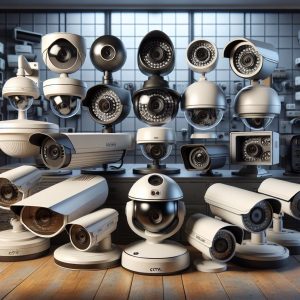
Security cameras are among the most exposed components of any security system, mounted outdoors in direct sunlight with no active cooling. During a heatwave, camera temperatures can reach levels that significantly affect performance and longevity.
Image sensor performance degrades at high temperatures. CMOS image sensors — used in virtually all modern security cameras — produce more electronic noise at elevated temperatures, resulting in grainy, speckled footage that degrades the ability to identify faces and details. This effect is most noticeable in low-light conditions, meaning that evening footage from an overheated camera can be significantly worse than normal.
Camera housings exposed to direct sun can reach internal temperatures of 60 degrees or more. At these temperatures, the camera’s processor may throttle its performance to prevent damage, reducing frame rate, resolution, or both. Some cameras display on-screen temperature warnings; others simply degrade silently.
Infrared LEDs used for night vision generate significant heat during operation. In a camera that is already hot from solar heating, the additional heat from IR LEDs can push the total thermal load beyond the camera’s ability to manage. Some cameras automatically disable night vision at high temperatures to protect themselves, leaving you with no night-time coverage on hot evenings.
Lens and housing materials can also be affected. Sustained high temperatures can cause plastic housings to warp slightly, potentially affecting weather seal integrity. Lens adhesive can soften, allowing the lens element to shift and defocus the image. UV-stabilised housings resist these effects better than standard plastics, which is an important consideration when selecting cameras for sun-exposed locations.
Battery Life and Heat: A Critical Relationship
Batteries are arguably the security component most affected by extreme heat. Whether they are the backup battery in your alarm panel, the batteries in wireless sensors, or the rechargeable battery in a wireless camera, all battery types suffer significant performance and lifespan reduction at high temperatures.
Lead-acid batteries, commonly used as alarm panel backup batteries, lose capacity permanently when exposed to sustained high temperatures. The chemical reaction inside the battery accelerates in heat, causing the electrolyte to break down faster. A lead-acid battery that would last five years at 20 degrees may last only two to three years in an environment that regularly reaches 40 degrees. Worse, the battery may appear to be charged but deliver significantly less capacity when actually needed during a power outage.
Lithium batteries used in wireless sensors and cameras also degrade faster in heat. While lithium technology is more temperature-tolerant than lead-acid, sustained exposure to temperatures above 40 degrees accelerates the chemical ageing process, reducing both capacity and cycle life. Wireless sensors in sun-exposed locations may need battery replacement twice as frequently as those in shaded positions.
In extreme cases, overheated batteries can swell, leak, or in rare cases, undergo thermal runaway — a condition where the battery’s internal temperature rises uncontrollably. While this is extremely uncommon in quality batteries from reputable manufacturers, it underscores the importance of keeping batteries within their rated temperature range.
Cooling and Shading Strategies
Practical strategies for managing heat exposure range from simple shading to active cooling, depending on the severity of your local conditions and the sensitivity of your equipment.
Shading is the most effective and simplest measure. Alarm panels in garages benefit enormously from reflective insulation on the garage roof and walls. Exterior camera housings can be fitted with sun shields or hoods that block direct sunlight while maintaining the camera’s field of view. White or light-coloured housings reflect more solar radiation than dark ones — if replacing cameras, choose white or silver housings for sun-exposed positions.
Ventilation improvements around alarm panels and equipment enclosures help dissipate heat. If your alarm panel is enclosed in a cupboard or cabinet, ensure that ventilation openings allow air to circulate. In garages, a small exhaust fan connected to a thermostat can activate when the temperature exceeds a set threshold, removing hot air and drawing in cooler air from outside.
Relocating equipment away from heat sources provides a permanent solution. If your alarm panel is in a garage that consistently exceeds 40 degrees in summer, moving it to an interior hallway or cupboard eliminates the problem entirely. The cost of relocation is modest compared to the cost of replacing heat-damaged equipment.
For outdoor cameras in extreme sun exposure, consider models with built-in cooling fans or heatsink designs. Some commercial-grade cameras include active cooling that maintains internal temperatures within safe limits regardless of ambient conditions. These units cost more than standard cameras but last significantly longer in harsh environments.
Heatwave Preparedness Checklist
When a heatwave is forecast, take proactive steps to protect your security infrastructure.
- Check alarm panel temperature — if located in a hot space, consider temporary additional ventilation
- Review camera feeds during the hottest part of the day for signs of image degradation
- Verify battery charge levels on all backup and wireless batteries
- Ensure all outdoor equipment housings are properly ventilated and not sealed shut
- Close curtains or blinds on windows facing direct sun to reduce interior temperatures near indoor equipment
- Test alarm communication paths during peak heat to confirm reliable operation
- Monitor power supply performance — erratic behaviour may indicate heat-stressed components
New Zealand’s increasingly warm summers present real challenges to security system reliability. By understanding the thermal vulnerabilities of your equipment, implementing practical shading and cooling measures, and monitoring system performance during extreme heat events, you ensure that your security infrastructure remains functional and effective through even the most intense heatwaves. The goal is simple — your security system should protect you in every condition, and with a little attention to heat management, it will.