Wireless Security Camera Battery Life Is Being Revolutionised by New Technology
Wireless security camera battery life and sensor longevity have long been the Achilles heel of cable-free security systems. The promise of wireless security — easy installation, flexible placement, no cable runs through walls — has always been tempered by the reality of battery maintenance. Sensors that need new batteries every six to twelve months create an ongoing maintenance burden that scales painfully with system size. But breakthroughs in battery chemistry and ultra-low-power processor design are fundamentally changing this equation, with some sensors now achieving operational lifespans exceeding ten years on a single battery.
For New Zealand property owners and security companies managing large deployments, this transformation addresses what has been the most significant operational cost and reliability concern of wireless security systems. When battery replacement visits disappear from the maintenance calendar, wireless security becomes not just convenient to install but genuinely low-maintenance to operate.
The Battery Chemistry Revolution
The batteries powering wireless security sensors have evolved dramatically from the standard alkaline cells that earlier systems relied upon. Several chemistry advances are driving the longevity improvements.
Lithium Thionyl Chloride (LiSOCl2)
Lithium thionyl chloride batteries have become the standard for professional-grade wireless security sensors. These primary (non-rechargeable) cells offer several properties that make them ideal for security applications:
- Energy density: LiSOCl2 offers the highest energy density of any commercially available primary battery chemistry, packing more energy into a smaller package
- Voltage stability: The cells maintain a stable 3.6V output throughout their discharge life, ensuring consistent sensor operation from first day to last
- Temperature tolerance: Operating range of -55 to +85 degrees Celsius covers all New Zealand conditions, from freezing alpine sites to sun-exposed rooftop installations
- Self-discharge rate: Annual self-discharge of less than one per cent means that stored energy is not wasted when the sensor is idle
- Shelf life: Up to 20 years of storage life, meaning batteries installed today will still have capacity a decade from now
Modern wireless alarm sensors using LiSOCl2 batteries and efficient low-power electronics routinely achieve five to ten years of operational life with typical usage patterns. Some manufacturers now offer warranties extending to ten years for battery-powered sensors, reflecting confidence in the technology.
Energy Harvesting: Beyond Batteries
The next frontier in wireless sensor power goes beyond better batteries to eliminating the need for batteries entirely. Energy harvesting technologies capture ambient energy from the sensor’s environment and convert it to electricity.
Current energy harvesting approaches for security sensors include:
- Indoor photovoltaic: Small solar cells that generate sufficient power from indoor lighting to operate low-power sensors indefinitely
- Thermoelectric: Generators that convert temperature differences — between a warm wall and cooler air, for example — into electrical power
- Kinetic: Piezoelectric elements in door and window sensors that harvest energy from the opening and closing motion itself
- Radio frequency: Rectenna technology that captures ambient RF energy from Wi-Fi, cellular, and broadcast signals
While energy harvesting for security sensors is still in its early commercial stages, several manufacturers have released self-powered door and window sensors that operate indefinitely without any battery. As the technology matures, the concept of a battery that needs replacing may become as obsolete for security sensors as it already is for solar-powered garden lights.
Ultra-Low-Power Processing
Battery longevity is not just about the energy source — it is equally about how efficiently the sensor uses that energy. Advances in ultra-low-power processor design have reduced the power consumption of security sensors by orders of magnitude compared to earlier generations.
Modern sensor processors incorporate several power-saving techniques:
- Deep sleep modes: The processor spends over 99 per cent of its time in a near-zero-power sleep state, consuming microwatts rather than milliwatts. It wakes only when the sensor is triggered or when a scheduled communication is due
- Wake-on-event: Dedicated hardware comparators monitor sensor inputs and wake the main processor only when a threshold is crossed, eliminating the need for continuous monitoring by the power-hungry main processor
- Efficient radio protocols: Communication protocols like Zigbee, Z-Wave, and BLE are specifically designed for intermittent, low-power transmission. A typical sensor transmission takes milliseconds, after which the radio returns to sleep
- Adaptive duty cycling: Smart sensors adjust their monitoring frequency based on context — checking more frequently during times of higher risk and reducing activity during quiet periods
Impact on Wireless Security Cameras
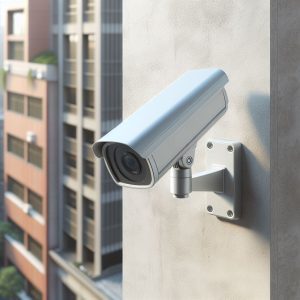
While sensors have benefited most dramatically from battery improvements, wireless security cameras are also seeing significant longevity gains. Cameras are inherently more power-hungry than sensors due to their image processing and transmission requirements, but several approaches are extending battery life substantially.
Event-driven recording is the most impactful power-saving technique. Rather than recording continuously — which drains batteries in hours — cameras remain in a low-power standby mode and activate only when motion or an AI detection event triggers recording. With efficient wake-from-sleep hardware, modern battery cameras can begin recording within 200 milliseconds of detecting activity.
Low-power AI chips enable on-device person detection that filters out irrelevant motion before activating the full camera system. A passing cloud shadow triggers only the ultra-low-power detection circuit, which determines there is no person present and allows the camera to remain in sleep mode. Only a genuine detection event powers up the main camera, processor, and radio for recording and transmission.
Efficient video compression reduces the data that must be transmitted, directly reducing the energy consumed by the radio — often the largest single power consumer in a wireless camera. Modern H.265 and H.266 codecs deliver equivalent quality at half or less the data rate of older H.264 compression.
Implications for Large-Scale Deployments
The operational impact of extended battery life is most pronounced in large deployments where the maintenance burden of frequent battery replacement is significant.
Consider a commercial property with 100 wireless sensors. With older technology requiring annual battery replacement, that is 100 maintenance visits per year — each requiring a technician to access the sensor, replace the battery, test the device, and update the maintenance log. At even modest per-visit costs, the annual battery maintenance expense can exceed the original sensor cost.
With ten-year battery life, the same deployment requires battery maintenance once per decade rather than annually. The cumulative saving over the sensor’s lifetime is substantial, and the reliability improvement — fewer missed replacements, fewer sensors operating on depleted batteries, fewer false low-battery alerts — is equally valuable.
For New Zealand security companies, reduced maintenance visits also mean the ability to service more clients with the same workforce — a significant advantage given the industry’s ongoing skills shortage.
Choosing Long-Life Wireless Security Products
When selecting wireless security products for a New Zealand deployment, several battery-related specifications deserve attention:
- Battery type: LiSOCl2 chemistry for the longest life in professional sensors. Avoid products using standard alkaline or even lithium AA cells for primary security devices
- Stated battery life: Look for realistic estimates based on typical usage rather than laboratory-minimum-activity calculations
- Battery monitoring: The system should report remaining battery capacity to the management platform, enabling proactive replacement before failure
- Replacement accessibility: When batteries eventually need replacing, the process should be simple and not require specialist tools or knowledge
- Operating temperature range: Ensure the battery chemistry is rated for the temperature extremes at the installation location
The best wireless security device is one you install and forget — not because you stopped caring about security, but because the technology has matured to the point where it simply works, year after year, without demanding your attention or your maintenance budget.
Battery technology breakthroughs are removing the last significant barrier to wireless security system adoption for large and demanding deployments. For New Zealand property owners and security professionals, the message is clear — the next generation of wireless security devices will not just be easier to install than wired alternatives, they will be easier to maintain as well. When a sensor can operate for a decade without human intervention, wireless security moves from a convenient compromise to the genuinely superior choice.