New Build Security Requirements NZ: Planning Protection into Your Home from the Ground Up
Spring and summer in New Zealand mark the peak of the building season. Across the country, new home construction accelerates as the weather improves, consents are granted, and builders break ground on thousands of residential projects. For anyone planning or already building a new home, new build security requirements in NZ represent a unique opportunity — the chance to design security into your home from the foundation up, rather than retrofitting it after the fact. The decisions you make during the design and build phase determine the quality, capability, and cost-effectiveness of your security infrastructure for decades to come.
Retrofitting security into an existing home always involves compromise — running cables through finished walls, mounting sensors in suboptimal positions, and working around existing structures. A new build has none of these constraints. Every cable can be concealed, every sensor positioned perfectly, and every component integrated seamlessly into the architecture of the home.
Security Considerations During the Design Phase
The most cost-effective time to plan security is during the architectural design phase, before building consent is submitted. At this stage, changes to the plans cost nothing beyond the architect’s time, whereas changes during or after construction can be expensive and disruptive.
Begin by identifying the security zones within your home. A typical residential security plan includes a perimeter zone covering all external doors and windows, an interior zone covering hallways and common areas, a sleeping zone covering bedrooms, and potentially a high-security zone covering a home office, safe room, or dedicated storage area. These zones determine the number and placement of sensors, the wiring routes required, and the alarm panel configuration.
Work with your architect to position the alarm panel in a secure, accessible, climate-controlled location. The ideal position is an interior hallway or cupboard — away from exterior walls that might be attacked, away from garages and roof spaces that experience temperature extremes, and accessible enough for daily arming and disarming. The panel should be near the main electrical distribution board for power supply and near the home’s network infrastructure for communication.
Plan camera positions during the design phase to ensure optimal coverage of all approaches to the property. Cameras mounted under eaves, integrated into fascia boards, or recessed into wall niches are more discreet and better protected than surface-mounted cameras added after construction. Identify the mounting positions on the plans and ensure that they provide clear sightlines to driveways, gates, front and rear doors, and any side passages.
Consider the placement of external doors and windows from a security perspective. Ground-floor windows that open onto concealed side passages are inherently more vulnerable than those facing the street or a neighbour’s property. While security should not override architectural design, awareness of how design choices affect vulnerability allows informed compromises.
Pre-Wiring: The Foundation of Future-Proof Security
Pre-wiring during the construction phase is the single most important step in new-build security. Running security cables through wall cavities, ceiling spaces, and conduits before the walls are lined is straightforward, inexpensive, and invisible in the finished home. Attempting the same cable runs after the home is completed involves cutting into finished surfaces, running visible trunking, or accepting compromised cable routes.
At minimum, pre-wire for the following: Category 6 network cable to every planned camera position, alarm cable to every external door and window for sensors, alarm cable to hallways and rooms designated for motion sensors, cable to planned siren and strobe positions, cable to the front door for a video intercom or doorbell camera, and cable to any planned access control points such as electric strikes or magnetic locks.
Even if you do not plan to install all of these components immediately, having the cable in place allows you to add them at any time in the future without disrupting the finished home. The cost of pre-wiring during construction is minimal — typically a few hundred dollars for cable and an hour or two of the electrician’s time. The cost of retrofitting the same cable runs after construction can be ten times higher.
Run cables in conduit wherever possible. Conduit protects the cable from physical damage during construction and, crucially, allows you to pull additional or replacement cables in the future without opening walls. A conduit network throughout your new home is the ultimate future-proofing measure for security and data infrastructure.
For expert guidance on pre-wiring specifications and security system design for new builds, consulting with The Security Company during the design phase ensures that your new home’s security infrastructure is planned by professionals who understand both the technology and the practical requirements of construction. Their professional security solutions team can produce detailed pre-wiring specifications for your builder and electrician.
Locks, Doors, and Physical Security in New Builds
New construction allows you to specify high-quality physical security components from the outset, rather than inheriting the developer’s standard choices and upgrading later.
External doors should be specified to exceed minimum building code requirements. Solid-core timber or aluminium doors with multi-point locking systems provide significantly better resistance to forced entry than standard single-point locks. Specify deadbolts on all external doors, with restricted key cylinders that cannot be copied at standard locksmiths.
Hinges on outward-opening external doors should include hinge bolts or security hinges that prevent the door from being lifted off its hinges when closed. Standard butt hinges on an outward-opening door can be exploited by removing hinge pins — a vulnerability that is easily prevented with the correct hardware specification.
Window hardware specification is an area where many new builds accept the minimum standard. Specify window stays that restrict opening width on ground-floor windows, keyed window locks rather than simple latches, and laminated glass in any windows that are in concealed or accessible locations. Laminated glass does not shatter on impact — it holds together, making it far more difficult to breach than standard float glass.
Garage doors should be specified with secure roller or sectional systems with automatic locking mechanisms. The internal door between garage and house should be treated as an external security door — solid core, deadlocked, and alarmed — because the garage is the most common entry point for break-ins in new homes.
Smart Home Integration Planning
A new build is the ideal platform for smart home integration that combines security with automation, energy management, and convenience. Planning this integration during the design phase ensures that systems work together seamlessly rather than operating as separate silos.
Smart lighting throughout the home enhances security by allowing automated lighting schedules, motion-triggered illumination, and remote control when you are away. Pre-wire for smart switches in all security-relevant locations — external lights, hallway lights, and entry point lights — even if you install standard switches initially. Smart switches require neutral wire connections that are easy to provide during construction but difficult to retrofit in older wiring configurations.
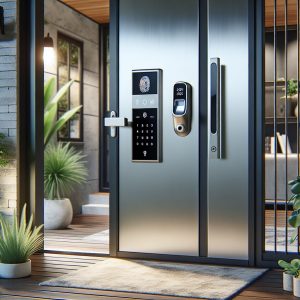
Smart lock ready doors require specific preparation during construction. Electronic locks need power — either battery or hardwired — and may require network connectivity for remote operation. Ensure that door frames can accommodate the thicker bodies of smart locks, and that power and data cables are routed to the lock position if you plan to use hardwired smart locks.
A centralised network cabinet or rack provides a home for your alarm panel, network equipment, camera recorder (NVR), and smart home hub. Specify a well-ventilated, climate-controlled cupboard or cabinet in a central location, with adequate power outlets, network patch panel, and space for future expansion.
Building Consent and Compliance Considerations
While New Zealand’s building code does not mandate specific security system installations for residential properties (with the exception of smoke alarms under the Residential Tenancies Act for rental properties), several code requirements intersect with security planning.
- Smoke alarms are mandatory in new builds — integrate them with the security panel from the outset
- Pool fencing compliance must be addressed during consent if the property includes a pool
- External lighting should meet both security needs and resource consent requirements for light spill
- Any electronic locking on emergency exits must comply with fire egress requirements
- Security camera positions should respect privacy obligations regarding neighbouring properties
- Pre-wiring for security systems should be included in the electrical plans for inspection
Building a new home is one of the largest investments most New Zealanders will ever make. Ensuring that security is planned, designed, and built into the home from day one protects that investment with a level of integration, quality, and cost-effectiveness that cannot be matched by any retrofit approach. The few thousand dollars spent on security design and pre-wiring during construction delivers decades of superior protection — making it one of the smartest investments in the entire build budget.