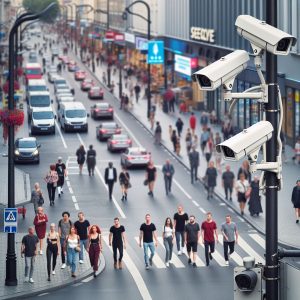
AI Video Analytics to Upgrade Your CCTV: Smart Security Without Starting from Scratch
AI video analytics can upgrade your existing CCTV system from a passive recording tool into an intelligent security platform that actively detects threats, filters false alarms, and alerts you to genuine security events in real time. The critical insight for businesses considering this upgrade is that adding AI analytics does not require ripping out your current cameras and starting over. Through NVR replacements, add-on analytics appliances, or cloud-based processing services, businesses can gain smart detection capabilities while preserving their existing camera infrastructure investment.
For New Zealand businesses running CCTV systems installed three to ten years ago, this approach represents the most cost-effective path to modern security capabilities. The cameras themselves — if they are IP cameras with reasonable resolution — remain perfectly serviceable. It is the recording and analysis backend that benefits most from upgrading to AI-powered processing.
What AI Video Analytics Actually Does
Traditional CCTV systems record continuously and detect motion. That is essentially the extent of their intelligence. When a motion event occurs, the system records a clip and may send an alert. The problem is that motion detection cannot distinguish between a person, a vehicle, a cat, a bird, a shadow, or a tree branch moving in the wind. The result is an overwhelming volume of false alerts that operators quickly learn to ignore — defeating the purpose of the alerting system entirely.
AI video analytics replaces simple motion detection with intelligent scene analysis. Deep learning models trained on millions of images can classify objects in real time, distinguishing between people, vehicles, and animals with accuracy above 95 percent. Beyond classification, AI analytics can detect specific behaviours and events:
- Person detection: Alerts only when a human being enters a defined zone, ignoring all other movement
- Vehicle detection: Identifies cars, trucks, and motorcycles, with some systems capable of colour and type classification
- Loitering detection: Alerts when a person remains in an area longer than a defined threshold
- Line crossing: Triggers when a person or vehicle crosses a virtual boundary line in the camera’s field of view
- Intrusion detection: Alerts when anyone enters a defined restricted zone during specified hours
- Object left behind: Detects when an object appears in a scene and remains stationary, flagging potential abandoned items
- Object removed: Alerts when a tracked object disappears from the scene, useful for monitoring valuable assets
- Crowd formation: Detects when people gather in unusual numbers in a specific area
Three Paths to Adding AI Analytics
Businesses have three primary options for adding AI video analytics to an existing camera system. Each has distinct advantages and trade-offs that suit different situations.
Path 1: Upgrade Your NVR
The most straightforward approach is replacing your existing Network Video Recorder with a current-generation model that includes built-in AI analytics processing. Modern NVRs from manufacturers like Hikvision (AcuSense), Dahua (WizSense), and Uniview contain dedicated AI chipsets that process video from connected cameras in real time.
The key advantage of this approach is simplicity. You replace one piece of hardware — the NVR — and immediately gain AI analytics across all connected cameras. The existing cameras, cabling, and PoE switches remain in place. Configuration is handled through the new NVR’s interface, and the system operates entirely on-premises with no cloud dependency.
Cost for an AI-capable NVR ranges from approximately NZ$800 for an 8-channel unit to $3,000 for a 32-channel enterprise model. Compared to replacing an entire camera system, this represents a fraction of the cost while delivering the most impactful capability upgrade.
Providers like Garrison Alarms, a leading NZ security provider, can assess your existing camera system and recommend the appropriate AI-enabled NVR that maximises the performance of your current cameras while adding intelligent detection capabilities.
Path 2: Add an Analytics Appliance
For organisations that want to keep their existing NVR (perhaps because it has substantial storage capacity or integrates with other building systems) an external analytics appliance can be added to the network alongside the NVR. These dedicated computing devices tap into the camera streams, process them through AI models, and generate alerts and metadata independently of the recording system.
Analytics appliances range from compact edge computing devices that process four to eight camera streams to rack-mounted servers that handle 64 or more channels. They typically run specialised video analytics software from companies like Briefcam, Agent Vi, or Milestone and offer more advanced analytics capabilities than built-in NVR processing, including forensic search, heat mapping, and behavioural analytics.
This approach suits larger installations where the analytics requirements exceed what a standard NVR can provide, or where the existing NVR must remain in place due to integration dependencies.
Path 3: Cloud-Based Analytics
Cloud analytics services process video footage in the cloud, eliminating the need for any on-premises AI hardware. Camera streams are sent to the cloud platform, where powerful AI models analyse the footage and deliver alerts, search capabilities, and dashboards through a web interface.
Cloud analytics offers several advantages: no hardware to purchase or maintain, automatic model updates that continuously improve accuracy, and scalability that accommodates any number of cameras without additional hardware. The trade-offs include ongoing subscription costs, bandwidth requirements for uploading video streams, and data sovereignty considerations for organisations that prefer to keep footage within New Zealand.
Hybrid cloud models mitigate some of these concerns by performing basic analytics on-premises and sending only metadata and event clips to the cloud for advanced processing and storage.
Getting the Most from Your Existing Cameras
While AI analytics can work with most IP cameras, the quality of the analytics output depends significantly on camera image quality, positioning, and configuration. Before investing in an analytics upgrade, evaluate your existing cameras against these criteria.
Resolution
AI analytics performs best with cameras of 2 megapixels (1080p) or higher resolution. Cameras below this resolution may not provide sufficient detail for reliable person and vehicle classification, particularly at longer distances. If some of your cameras are older VGA or 720p models, consider upgrading those specific cameras while keeping your higher-resolution units.
Positioning and Field of View
AI object classification works best when the camera provides a clear, unobstructed view of the detection area with the subject occupying a reasonable portion of the frame. Cameras mounted too high, angled too steeply, or covering excessively wide areas may not capture sufficient detail for reliable AI classification.
A pre-upgrade site survey should evaluate each camera’s suitability for AI analytics and identify any that need repositioning or lens adjustment to optimise detection performance.
Lighting Conditions
AI analytics accuracy degrades in poor lighting. Cameras in areas with inadequate lighting — particularly during nighttime — may need supplementary illumination to ensure the AI can reliably classify objects. Modern cameras with excellent low-light performance help, but they cannot create detail that is not there. Purpose-built IR or white light illuminators in critical detection zones significantly improve analytics accuracy.
Measuring the Return on Investment
The business case for adding AI analytics to an existing CCTV system is built on several measurable benefits.
AI video analytics does not make your old cameras obsolete — it makes them intelligent. The cameras capture the images. The AI understands what those images mean. Together, they deliver security capabilities that neither could provide alone.
False alarm reduction: Businesses typically experience a 90 percent or greater reduction in false alerts after implementing AI analytics. This means security staff spend their time responding to genuine events rather than chasing animal activations, shadow movements, and environmental triggers.
Faster incident response: Real-time alerts for specific event types — person in a restricted area, vehicle in a no-parking zone — enable immediate response rather than after-the-fact footage review.
Reduced monitoring costs: For businesses using professional monitoring services, the dramatic reduction in false alarms translates directly to lower monitoring costs, as monitoring centres charge more for high-false-alarm sites.
Forensic search efficiency: AI-generated metadata makes finding specific incidents in recorded footage a matter of seconds rather than hours. Search for “person near the loading dock between 8 PM and midnight” instead of manually reviewing four hours of footage from multiple cameras.
For most New Zealand businesses, the investment in AI analytics pays for itself within 12 to 18 months through reduced false alarm costs, improved operational efficiency, and enhanced security effectiveness — all without replacing a single camera.