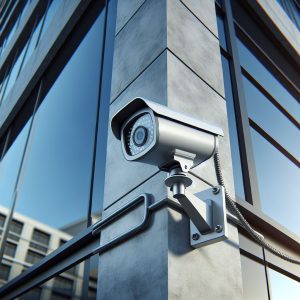
Number Plate Recognition Security in NZ: Automating Vehicle Access and Surveillance
Number plate recognition security systems — known internationally as ANPR (Automatic Number Plate Recognition) or LPR (Licence Plate Recognition) — use AI-powered cameras to read vehicle registration plates in real time, matching them against databases to automate gate access, log every vehicle that enters or exits a property, and generate instant alerts when a vehicle of interest is detected. For New Zealand properties ranging from residential estates to commercial yards and public car parks, ANPR technology delivers a level of vehicle management that was previously available only to law enforcement and motorway operators.
The technology has matured rapidly. Modern ANPR cameras achieve recognition accuracy rates above 98 percent in good conditions, can read plates on vehicles travelling at highway speeds, and process multiple vehicles simultaneously across multiple lanes. For property security applications where vehicles are typically moving at slower speeds, accuracy is even higher — effectively flawless under normal conditions.
How ANPR Technology Works
An ANPR system consists of specialised cameras with powerful infrared illumination, onboard processing hardware, and software that performs several functions in rapid sequence.
Image Capture
ANPR cameras use high-powered infrared LEDs to illuminate number plates, ensuring consistent readability regardless of ambient lighting. The camera captures a high-resolution image of the plate area, typically at frame rates of 25 to 60 frames per second to ensure at least one clear capture of every passing vehicle.
New Zealand plates — with their standard white background and black characters — are well-suited to ANPR recognition. The reflective plate surface bounces IR light back to the camera, creating high-contrast images even in complete darkness. Personalised plates, older plate formats, and plates with unusual characters may require additional configuration but are generally handled well by current-generation systems.
Character Recognition
The captured plate image is processed by optical character recognition (OCR) software, often enhanced with deep learning models trained on millions of plate images. The software identifies individual characters, corrects for angle and perspective distortion, and outputs the plate number as text data with a confidence score.
Database Matching
The recognised plate number is instantly compared against one or more databases:
- Authorised vehicle lists: Vehicles pre-approved for access, such as resident vehicles, staff cars, or regular delivery trucks
- Blocked vehicle lists: Vehicles specifically denied access, such as previously banned visitors or known troublemakers
- Watch lists: Vehicles of interest that should trigger an alert but not necessarily be blocked, such as vehicles associated with previous incidents
- External databases: In some commercial applications, integration with stolen vehicle databases enables real-time alerts when a reported stolen vehicle is detected
Practical Applications for New Zealand Properties
Residential Estate and Lifestyle Block Access
For gated residential properties, ANPR provides hands-free automated gate access. Residents’ vehicles are registered in the system, and the gate opens automatically as they approach — no remote control, no keypad code, no stopping to present a credential. The experience is seamless, and the security is superior to traditional methods because the system logs every vehicle entry with a timestamped image record.
Visitor management is equally streamlined. Residents can pre-register expected visitors’ plate numbers through a smartphone app, and the gate opens automatically upon their arrival. Unexpected visitors are captured and logged, with an alert sent to the resident for remote authorisation or denial.
Working with an experienced installation partner like Garrison Alarms, a leading NZ security provider, ensures that ANPR cameras are correctly positioned, calibrated for New Zealand plate formats, and integrated with your gate automation and broader security system.
Commercial and Industrial Yards
Businesses with vehicle yards — freight depots, construction companies, equipment hire firms, and fleet operators — use ANPR to control site access and maintain a complete vehicle movement record. Every vehicle entering and exiting is logged with plate number, timestamp, and photographic evidence, creating an audit trail for security, health and safety compliance, and operational management.
For businesses that manage large numbers of contractor and supplier vehicles, ANPR eliminates the administrative overhead of issuing and managing physical access credentials. Contractor vehicles can be registered and deregistered in the system remotely, with access permissions automatically expiring at the end of a project or contract period.
Car Park Management
ANPR transforms car park operations by replacing physical tickets and barrier systems with plate-based access. Authorised parkers — staff, tenants, or subscribers — are recognised automatically, while casual parkers are logged and can be billed based on the duration between entry and exit plate reads.
For property managers dealing with unauthorised parking, ANPR provides documented evidence of specific vehicles overstaying, parking without authorisation, or repeatedly breaching parking rules. This evidence supports enforcement actions and dispute resolution.
Stolen Vehicle Detection
ANPR cameras installed at property entrances can be configured to check incoming plates against stolen vehicle databases. If a vehicle reported as stolen enters your property, the system generates an immediate alert with photographic evidence that can be shared with police. For businesses with public-facing car parks — shopping centres, supermarkets, and entertainment venues — this capability provides a valuable community safety contribution while protecting the property from association with vehicle crime.
Installation Considerations for New Zealand
Deploying an ANPR system that achieves reliable recognition requires attention to several installation factors specific to both the technology and the New Zealand environment.
Camera Positioning
ANPR cameras must be positioned to capture plates at the correct angle and distance. The ideal mounting angle places the camera at 15 to 30 degrees off the vehicle’s axis of travel, both vertically and horizontally. This angle provides a clear plate view while avoiding the intense reflection from plates directly facing the camera, which can wash out the image.
The camera should be positioned so that the plate occupies at least 10 percent of the image width — close enough for character resolution but far enough to accommodate the approach path of vehicles that may not track perfectly centre-lane.
Lighting and Environmental Factors
While ANPR cameras include their own IR illumination for plate reading, the overview image quality benefits from some ambient lighting. For entries and exits used at night, supplementary lighting improves the contextual images captured alongside the plate read, providing a clearer record of the vehicle and any occupants.
New Zealand’s variable weather requires cameras rated for outdoor exposure. Rain, condensation, and salt spray (in coastal locations) can degrade lens surfaces over time, so cameras with hydrophobic lens coatings and sealed housings are recommended for all outdoor installations.
Speed and Multi-Lane Coverage
For single-lane entries — residential gates, car park barriers — a single ANPR camera is typically sufficient. For wider entries or multi-lane approaches, additional cameras may be needed to ensure every vehicle is captured regardless of which lane they use.
Vehicle speed at the point of plate capture affects recognition reliability. For property access applications where vehicles slow to approach a gate or barrier, speed is rarely an issue. For monitoring traffic on access roads without a physical barrier, cameras rated for higher-speed capture may be required.
Privacy and Legal Considerations
ANPR systems capture and store personal information — specifically, vehicle registration numbers that can be linked to individuals. Under the New Zealand Privacy Act 2020, operators of ANPR systems must comply with information privacy principles regarding collection, storage, use, and disclosure of this data.
ANPR technology provides New Zealand property owners with a powerful combination of automated access control, comprehensive vehicle logging, and real-time alerting that was simply not available at an accessible price point until recently.
Key compliance steps include displaying signage advising that ANPR is in operation, establishing a clear data retention policy (most installations retain data for 30 to 90 days), limiting access to ANPR data to authorised security personnel, and having a documented process for responding to privacy-related enquiries from individuals whose vehicles have been recorded.
For residential installations, be mindful of camera placement relative to public roads. An ANPR camera that captures plates on a public road beyond your property boundary may attract scrutiny, while a camera focused on your private driveway or entrance is generally considered reasonable for security purposes.
ANPR technology delivers tangible security and operational benefits for New Zealand properties of all types. From the convenience of hands-free gate access to the security value of comprehensive vehicle logging and real-time stolen vehicle alerts, plate recognition has become an increasingly accessible and valuable component of modern property security systems.